
What Is Breast Ptosis?
Plastic surgeons assess the degree of ptosis, or sagging, when planning your breast lift, the proven solution for reclaiming a perky, youthful breast profile. Here, skilled South Florida plastic surgeons Dr. David Rankin and Dr. Allyson Deziel discuss ptosis, the causes of sagging, and the popular breast lift procedure.
Shape, Elevation, Degree
To determine the degree of breast droopiness, plastic surgeons look at the position of the nipple relative to the fold or crease at the base of the breast. With Grade 1 ptosis, the nipple and crease are at the same level. In Grade 2 cases, the nipple has dropped below the crease, but it is still higher than the breast gland area that projects over the fold. In Grade 3 ptosis, the nipple is the lowest part of the breast.
Breast lift is effective at reversing each type of sagging. By elevating the breasts on the chest, the procedure recreates the upper body profile you remember from your younger years, or before pregnancy. Breast lift can also help restore symmetry, when ligaments have relaxed to a greater extent in one breast compared to the other. In addition, the procedure can return low or downward-pointing nipples to a natural position and appearance.
Causes of Sagging
Sagging can occur as a result of pregnancy, changes in weight or simply the passage of time. Breastfeeding does not contribute to sagging of breasts, but it can seem that way when drooping appears once breastfeeding has stopped. In reality, it is the entire process of pregnancy that puts strain on the breasts. During this time, breasts naturally swell to a larger size. When this happens, the skin stretches. Once your infant is no longer breastfeeding, the milk-producing gland shrinks and the breasts return to their usual size. But because the skin may not be flexible enough to shrink back to a correspondingly smaller size, sagging can result.
After breast lift, you can expect long-term improvement in the appearance of your breasts. Dramatic changes in weight or a new pregnancy may result in a recurrence of sagging, however. The smaller the breast, the more likely it is that you will retain the shape, elevation and projection you achieved with breast lift. If in the future you find that your breasts have begun to sag, there is no risk to repeating the procedure.
To find out more about breast lift, please contact Aqua Plastic Surgery by calling our Jupiter office at (561) 776-2830 or use our easy contact form.

Facts About Breast Explant Surgery
A breast explant procedure involves removal of breast implants while maintaining a natural body profile. It is major surgery, and typically more complex than the original placement. That is because scar tissue forms after most surgical procedures.
Experienced plastic surgeon Dr. David Rankin has performed hundreds of breast explant surgeries for patients throughout South Florida. We are ready to help you achieve your aesthetic or medically necessary goals with precise implant removal.
Restoring a Natural Profile
When implants are removed, the pocket that held the implant must be refilled with natural tissue to restore an attractive profile. The technique used is similar to breast lift. When large implants are removed, the skin may have a stretched look; in addition, the breasts may appear to sag or have a deflated appearance.
Dr. Rankin is skilled in reshaping and lifting your breast tissue to ensure your look is as natural as before your initial surgery.
Preference and Necessity
There are many reasons women choose breast explant surgery. Sometimes it is a matter of preference: a patient simply does not like the look or feel of implants, or the goals she was hoping to achieve were not met. Occasionally patients have health conditions, such as autoimmune diseases, that may be aggravated by the presence of implants. Implants may have drifted or begun to affect the texture of the skin.
In some cases a condition such as capsular contracture develops. This happens when scar tissue forms around an implant. Patients feel pain and notice a hardening of breast tissue. Scarring from capsular contracture can actually cause an implant to rupture.
Recovery
If your explant surgery involved the removal of scar tissue, you may feel some discomfort, which will be managed with prescribed medication. Beyond that, your recovery will be very similar to that of your initial surgery. You will again experience soreness and swelling, and will need to limit activities for several days. It will actually take several months for the swelling to disappear.
To find out more about breast explant surgery, please contact Aqua Plastic Surgery by calling our Jupiter office at (561) 776-2830.

What Is the Difference Between Facelift and Mini Facelift?
Mini facelift is the middle ground between traditional facelift and dermal fillers, a quicker procedure that reverses moderate signs of aging along the jawline and adjacent facial areas. Patients experience the best satisfaction and success when skin and muscle laxity is not far advanced, and when their expectation is for subtle improvements in the lower face.
Here, skilled South Florida plastic surgeons Dr. David Rankin and Dr. Allyson Deziel of Aqua Plastic Surgery compare the two popular procedures, and suggest key variables to consider when choosing which facelift variation is right for you.
Full Facelift vs. Mini Facelift
Mini facelift is often an ideal choice for clients who want to refresh their facial appearance without significant downtime. Although mini facelift is surgery, it is usually done with local anesthetic supplemented by a mild sedative. The procedures takes about two hours and involves less extensive incisions. Recovery time is one to two weeks. Traditional facelift requires double the surgical time, is performed with general anesthesia, involves a longer recovery period and on average costs more.
Not surprisingly, a traditional facelift is more comprehensive in its approach — improving the brows, forehead, cheeks, jowls, chin and upper portions of the neck. Because a full facelift involves more extensive tightening of the skin and underlying muscles, patients can expect to look 10 to 15 years younger after the procedure, while mini facelift typically turns back the clock five to 10 years.
Comparing the Procedures
With a mini facelift, your surgeon makes a small incision along the contour of the ear and tightens the jawline by pulling tissue upward through the cheeks. A traditional facelift trims years from a patient’s appearance by tightening facial skin and muscles, while sometimes also removing skin and fat. Full facelift targets displaced fat and sagging tissue on the cheeks, creases beneath the lower eyelids, excess skin and fat along the jawline, and furrows between the nose and corners of the mouth.
Patients in their 40s and 50s often consider mini facelift as a way to address early signs of aging that have become progressively more noticeable. They seek moderate improvement in the lower face and upper neck, and are not concerned about forehead wrinkles, lines and sagging around the eyes, or tightening in areas above the jawline. These patients appreciate the shorter downtime and reduced complexity of the procedure. Many have benefited from dermal fillers, but now need a modest surgical intervention to complete their rejuvenated look.
To learn more about mini facelift or traditional facelift, reach Aqua Plastic Surgery by calling our Jupiter office at (561) 776-2830 or using our contact form.

Ways To Reduce Surgical Scarring
Our surgeons are skilled in choosing the particular surgical technique that will minimize scarring for your cosmetic procedure. Key to that is carefully planning how many incisions will need to be made, and where they will be located. The process requires artistry, experience and precision.
Home Care
Dr. David Rankin and Dr. Allyson Deziel will work closely with you to understand your preferences for placement and number of incisions. Once the surgery is over, there are things you yourself can do to speed the healing and ensure that any scars will be minimal in appearance. Your doctor will prescribe a topical medication that you will apply at home that will promote successful healing by keeping the area free of bacteria. The less energy your body devotes to defending against microbes, the more it can focus on healing.
Avoiding physical activity during recovery is another way you can help your body heal without stress or distraction. Vigorous exercise, reaching, lifting and straining can all pull at the skin and result in an irregular healing pattern. Your doctor will advise you when you may return to light activity such as walking, which is good for both your circulation and mood.
Lifestyle Choices
Smoking may seem like the type of behavior that, although damaging to your long-term health, wouldn’t have much of an effect on healing. In reality, smoking interferes with your body’s ability to supply ample oxygen to the cells, and oxygen is vital to the healing process. It is important not to smoke before your surgery and during recovery.
Finally, it is important that you minimize exposure to the sun’s powerful ultraviolet rays. It’s good advice on any day, but especially during the time your skin is working hard to close an incision. Sun exposure in the days after surgery can result in scars that are thicker and darker — and much more noticeable.
To find out more about surgical procedures, please contact Aqua Plastic Surgery by calling our Jupiter office at (561) 776-2830 or using our contact form.

Best Anti-Aging Procedures for the Lower Face and Neck
For patients seeking dramatic improvement in the appearance of the lower face, facelift remains the go-to choice. After more than a half century of popularity, this proven surgery is still referred to as the “gold standard” in facial rejuvenation.
There are alternatives, however, including an ever-expanding array of noninvasive options. Here, experienced South Florida plastic surgeon Dr. David Rankin discusses the full range of available choices.
Facelift
Facelift works by tightening facial skin and muscles, while sometimes also removing skin and fat. It comprehensively corrects signs of aging by focusing on the middle and lower facial regions. It targets loose skin, displaced fat or sagging tissue on the cheeks, creases beneath the lower eyelids, excess skin and fat along the jawline and furrows between the nose and corners of the mouth.
Neck Procedures
If you were born with skin that lacks flexibility and resilience, you may develop neck skin that sags, creates folds or hangs loosely. This is especially true in the case of patients who have lost a great deal of weight: Skin that lacks suppleness will not shrink sufficiently to conform to the reduced volume of a slimmer neck.
Liposuction, cervicoplasty and platysmaplasty are the main surgical solutions for improving the appearance of the neck. Liposuction removes fat, cervicoplasty eliminates excess skin and platysmaplasty goes even deeper by tightening or excising neck muscles. Platysmaplasty is indicated when sagging neck muscles create a “banded” appearance. These procedures are often part of a neck lift.
In most cases these procedures can be performed endoscopically, which reduces scarring and typically can be done as an outpatient procedure with a local anesthetic.
Other Options
To improve the appearance of the lower face, there are many noninvasive options to consider in place of surgery. Laser resurfacing can smooth and tighten the skin, and injectables will fill lines, wrinkles and hollows on your face that make you look older. New varieties of dermal fillers not only add volume to targeted facial areas but also trigger the production of collagen, the natural protein that adds strength and flexibility to the skin.
Fat transfer is an older technology, but it is very effective in specific cases. This technique harvests excess fat from elsewhere in the body and transplants small amounts into areas along the jawline to build volume.
When too much volume is the concern, liposuction under the chin to the neckline can be an effective option. Other techniques that can impact the look of the jawline include Kybella injections to shrink under-chin fat, ultrasound treatments and new radiofrequency (RF) energy treatments such as FACEtite, AccuTite and Agnest RF.
To find out more about plastic surgery solutions for the lower face and neck, please contact Aqua Plastic Surgery by calling our Jupiter office at (561) 776-2830.

When Breast Implants Rupture
When a woman chooses breast implant removal, she usually has plenty of time to make her decision. In cases where implants have drifted, lost integrity or have become visible on the surface of the skin, she has space to weigh options and choose an appropriate surgical solution.
But when an implant ruptures, most patients want to address the issue quickly. Implant rupture can cause pain, swelling and misshapen breasts. And although studies have failed to demonstrate clear health risks, allowing silicone gel to drift through your body is not a prudent choice. Experienced South Florida plastic surgeons Dr. David Rankin and Dr. Allyson Deziel explain what to expect in the case of an implant rupture.
Causes of Ruptures
A rupture is a tear in the silicone shell that encases the silicone gel or saline. Ruptures can also be caused by failure of a shell’s valve. The longer you’ve had your implants, the greater the chance you will experience a rupture.
The skill of your surgeon has a significant impact on the longevity of your implants. According to a 2013 study, a majority of silicone implant ruptures can be traced to damage to the shell caused by instruments during breast augmentation surgery. That said, even the most expertly placed implant won’t last forever.
Silicone’s Fantastic Voyage
Because saline is readily absorbed by the body, a saline implant rupture will have few, if any, side effects. Silicone will not be absorbed, and may in fact migrate to other areas of the body, invading the lymph system and traveling to the lungs. Scar tissue may form around silicone granules that have lodged in disparate areas of the body.
Sometimes when the outer layer of a silicone implant ruptures, there is little if any seepage of the silicone gel, but the tear can nonetheless distort the shape of the implant and breast. Symptoms can range from severe pain to no discomfort at all. The latter is often referred to as a “silent rupture.” An MRI may be needed to detect this type of tear.
At one time, it was believed that migration of silicone throughout the body was correlated with an increase in connective tissue disease, such as rheumatoid arthritis. Several recent studies seem to disprove this theory, however.
The solution for implant rupture is surgery to remove the implant, scar tissue and any silicone gel that is accessible to the surgeon. At this point, some women choose to receive new implants, but an autologous procedure is also an option. This is a reconstruction procedure using your own body’s tissue to restore a natural profile after the removal of an implant.
To find out more about implant benefits and risks, please contact Aqua Plastic Surgery by calling our Jupiter office at (561) 776-2830 or using our contact form.

Mommy Makeover Questions To Ask Your Surgeon
Mommy makeover is the broad term for a suite of body contouring surgeries that target changes to a woman’s body that occur during pregnancy. Mommy makeover is highly customized, tailored to each woman’s needs and expectations and also greatly dependent on a plastic surgeon’s skill to achieve optimal results.
Because so many key decisions are made by the patient, it is important to collect as much information as you can before the surgery, and to ask your surgeon questions that will inform your decision-making process. Below, experienced South Florida plastic surgeons Dr. David Rankin and Dr. Allyson Deziel provide answers to some of the questions most commonly asked by patients seeking mommy makeover.
What are my choices for mommy makeover surgery?
Available procedures include liposuction, to target specific areas of stubborn fat; abdominoplasty, or tummy tuck, to repair the abdominal wall and pare away excess folds of skin; and breast lift to restore the natural profile and firmness to breasts.
How soon after childbirth can I undergo mommy makeover?
The first step in choosing a mommy makeover procedure is to allow your body time to bounce back after pregnancy. Dr. Rankin and Dr. Deziel recommend waiting at least six months after childbirth to see how much of the weight and shape of pregnancy was temporary, and how much may need a surgical solution. This also allows time for the skin, muscle and uterus to regain their typical size and shape.
Can I have more children after mommy makeover?
With a few exceptions, it is recommended that women wait until after their final pregnancy before undergoing tummy tuck, a procedure that is central to mommy makeover. Pregnancy can undo the results of an earlier tummy tuck or other mommy makeover procedure. With a new pregnancy, the muscles that were repaired can separate once again, and the tightened skin can loosen.
Will mommy makeover erase stretch marks?
If your stretch marks are located in the lower abdomen, they will disappear when the skin is surgically removed during tummy tuck. Stretch marks on the mid-portion of the abdomen can be improved but not entirely eliminated. Stretch marks on the upper abdomen usually remain.
Will I have scarring?
Tummy tuck performed as part of mommy makeover requires a large incision in the lower abdomen, so scars are unavoidable. Dr. Rankin and Dr. Deziel are careful to make the incision in the least noticeable area, usually on the bikini line. If scarring is a concern, a mini tummy tuck or liposuction can be considered, if appropriate.
To find out more about mommy makeover options, please contact Aqua Plastic Surgery by calling our Jupiter office at (561) 776-2830.

How Long Should You Wait to Have Breast Implant Revision?
Recovering from breast augmentation is an emotional process filled with highs and lows. It can be hard to keep a positive attitude amidst discomfort, bruising, swelling and limited range of motion. It is common to experience some internal conflicts or even regrets over having breast implants placed.
In many cases, these regrets are fleeting, and patients are ultimately satisfied with their decision to undergo breast augmentation.
But this may not ring true in your experience. Perhaps you are experiencing persistent regrets or “buyer’s remorse” over your implants. If that is the case, you might want to consider breast implant revision. There is no reason to live with implants that do not provide the look or feel you want — or worse, have developed a complication.
The Aqua Plastic Surgery team can evaluate you as a candidate for breast revision and explain more about what breast revision can do for you. We will work to understand your implant-related concerns and goals and put together a suitable plan of action to help you achieve the look and feel you desire.
Timing Breast Implant Revision
How long you wait before having breast implant revision depends on the reason for your revision.
In the case of cosmetic issues, such as problems with the size of your implants, it is wise to wait a minimum of three to six months before pursuing breast implant revision. Residual swelling takes time to subside and your implants need time to settle in their final position.
You might end up changing your mind about the cosmetic issue once your results have stabilized. If, after six months or so, you are still not happy with the appearance of your implants, breast implant revision can fix the problem.
In the case of implant complications, the timeline for breast implant revision is different. Problems such as implant leaking, deflation, implants becoming displaced or “bottoming out” — i.e., when an implant falls below the inframammary crease — do not resolve on their own with time. When trying to address an issue that is not going to fix itself, sooner is usually better.
Talk With Our Breast Revision Experts
If you are interested in breast implant revision but have questions about timing your surgery, the team at Aqua Plastic Surgery can help. We will learn more about your reasons for wanting breast implant revision and advise whether the problem should be treated promptly or whether you should give it time to work out on its own. We will answer all of your questions and help you decide on the safest and most sensible plan of action.
Contact us today to request an appointment.

Treatment Options for Tired-Looking Eyes
No one likes to be told they look tired. But if you have puffiness, sagging or wrinkles around your eyes, you might hear this a lot. No matter how many creams or serums you use, those pesky signs of aging may be there to stay.
If this bothers you, consider a long-term treatment solution to rejuvenate your tired-looking eyes. The team at Aqua Plastic Surgery can review the available treatment options and help you find the approach that works best for your unique concerns.
Botox
Botox helps smooth crow’s feet and fine lines around the eyes by temporarily relaxing targeted muscles. The injectable can also treat vertical lines between the eyebrows, sometimes referred to as the “11’s.” Small amounts of Botox are injected into selected muscles, and as the muscle relaxes, the overlying skin around the eyes looks smoother, softer and more youthful. The results of Botox last three to six months, and repeat treatments are required to maintain the effects.
Dermal Fillers
Injecting dermal fillers can minimize the appearance of lower eyelid bags or shadows, helping you look rested and awake. The filler is strategically placed where the lower eyelid and upper cheek meet to soften this transition and camouflage bags or hollows. Like Botox, the results of dermal fillers are temporary, lasting anywhere from six to nine months or more; repeat treatments are needed to maintain the results.
Eyelid Surgery
Eyelid surgery removes excess eyelid skin and fat and tightens the remaining skin to treat puffy, saggy or droopy eyelids. After surgery, the eyes look brighter, more rested and more youthful.
Eyelid surgery can be performed on the upper eyelids, lower eyelids or both. The incisions for eyelid surgery are concealed within the natural creases of the skin, so scarring is not noticeable.
Brow Lift
Brow lift is performed to elevate a heavy or drooping brow that may create a hooded effect over the eyes. Lifting drooping brows not only helps you look more awake and rested, it opens up your entire face, giving you a more approachable expression.
During brow lift, excess skin along the brow and forehead is removed, and the remaining skin pulled tighter to subtly lift the brows. The muscles of the forehead are gently adjusted to reduce wrinkling around the eyes and on the forehead. The brow lift incisions are made in the hairline above each brow so that any scarring is easily concealed.
For more information about our treatment options for tired-looking eyes, use our contact form to request a consultation at Aqua Plastic Surgery or call us at (561) 776-2830.
Is There Any Way to Reduce the Risk of Capsular Contracture?
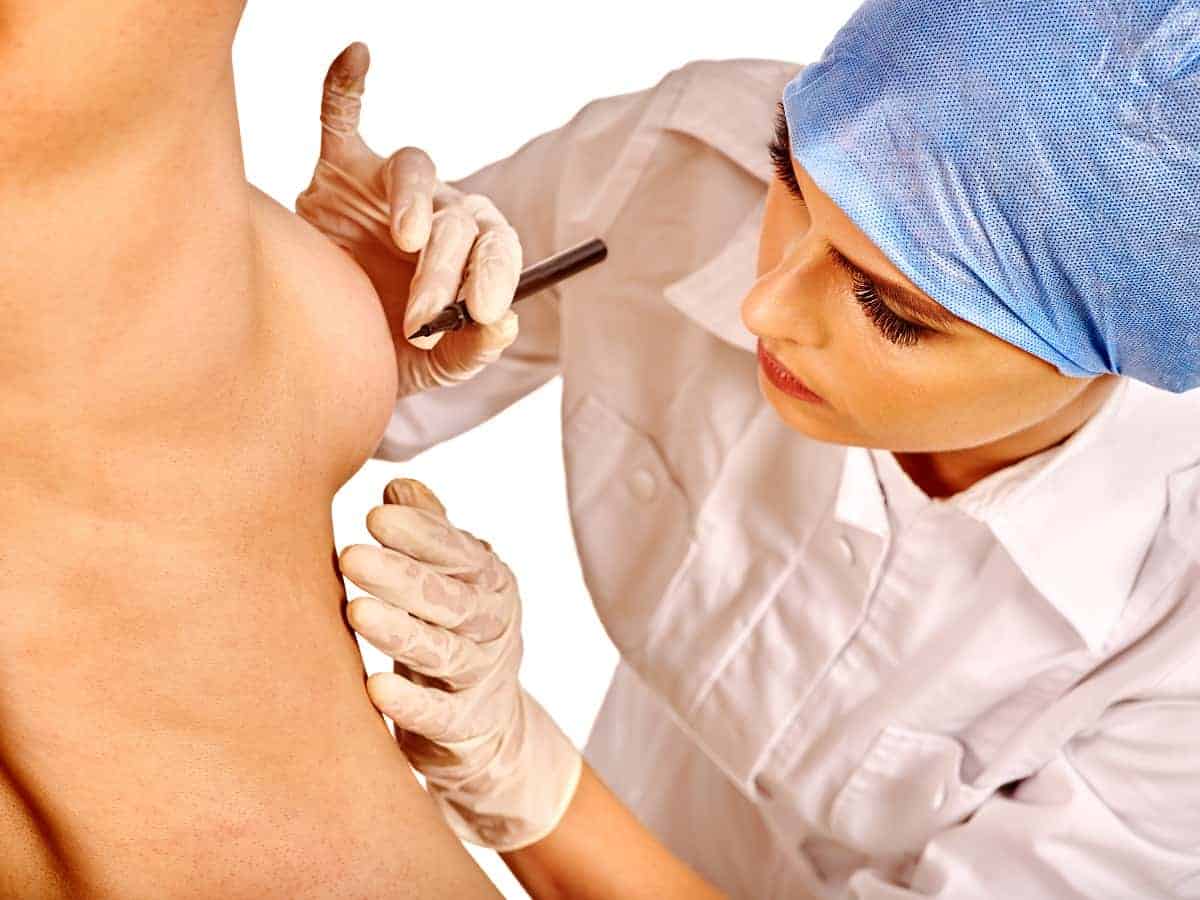
Capsular contracture is a complication of breast augmentation that occurs when the scar tissue that naturally forms around the implant hardens. The scar tissue can contract around one or both implants, causing pain and distortion.
Nowadays complications like capsular contracture are rare, as surgical techniques have evolved and plastic surgeons have become more knowledgeable about the circumstances that raise the risk of problems.
If you are planning breast augmentation, understand that some of the factors that lead to capsular contracture are out of your control. There is no surefire way to predict exactly how your body will react to the presence of breast implants.
On the other hand, the team at Aqua Plastic Surgery believes that some factors are in your control, and by making a few key decisions, you may reduce your risk of problems. Take a moment to learn more about managing your risk of capsular contracture.
Capsular Contracture at a Glance
Whenever any kind of medical or cosmetic implant is placed in the body, a “capsule” of scar tissue naturally forms around it. This is the body’s way of attempting to isolate the implant by creating a type of barrier around it. With breast implants, this capsule is helpful, as it keeps the implants in their intended position.
However, in some patients, the scar tissue becomes unnaturally hard and puts pressure on the implant. Depending on the severity of capsular contracture, the breasts can become sore, tender or painful to the touch and appear hard-looking or distorted.
There are numerous theories about what causes capsular contracture. A common theory is that it occurs when an implant is exposed to bacteria at the time of surgery. The bacteria can attach to the implant and form a sticky coating called biofilm. If blood clots form after surgery, they can encourage the growth of biofilm by providing nutrients to the bacteria.
Lower Your Risk
One of the most important things you can do to reduce your chances of getting capsular contracture is find a board-certified plastic surgeon you can trust. Experienced surgeons know how to carefully screen patients for any conditions that can increase the risk of breast implant complications, such as conditions that increase the risk of blood clots. A trusted board-certified plastic surgeon will use preventative strategies during surgery to limit the possibility of bacterial contamination.
Next, do your homework about your implant options. According to the American Society of Plastic Surgeons, the size of your implants as well as how and where they are placed may affect how likely you are to develop capsular contracture. For instance, placing implants below the chest muscle may reduce the risk of capsular contracture.
To learn more about what our surgeons do to minimize the risk of complications like capsular contracture, please contact Aqua Plastic Surgery by calling our Jupiter office at (561) 776-2830 or filling out the contact form.